
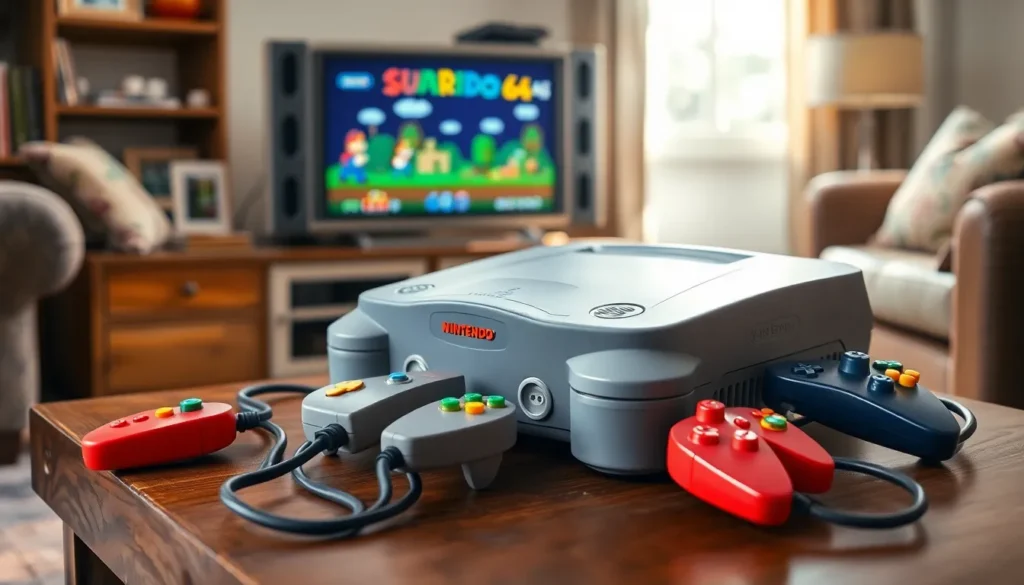
The Nintendo 64, often hailed as a revolutionary gaming console, marked a significant shift in the world of video games. With its introduction, players experienced a leap into 3D graphics and immersive gameplay that set the stage for future consoles. But when did this iconic system first hit the market?
Launched in the mid-90s, the N64 quickly captured the hearts of gamers with its innovative design and a library of unforgettable titles. From “Super Mario 64” to “The Legend of Zelda: Ocarina of Time,” the console became synonymous with gaming excellence. Understanding its launch date provides insight into the evolution of gaming and the legacy that continues to influence the industry today.
Overview of N64
The Nintendo 64, commonly referred to as the N64, debuted on June 23, 1996, in Japan and later on September 29, 1996, in North America. This console marked a significant technological advancement in the gaming industry by utilizing 64-bit architecture. This architecture enabled rich 3D graphics, setting a new standard for visual fidelity in video games.
The N64 featured a unique controller, notable for its three-pronged design, which allowed for enhanced gameplay experiences. Players enjoyed a range of titles that utilized this design effectively. Iconic games such as Super Mario 64, The Legend of Zelda: Ocarina of Time, and GoldenEye 007 demonstrated the console’s capabilities and helped shape gaming culture during the late 90s.
The console supported four-player multiplayer functionality, a significant feature for its time, fostering social gaming experiences. The N64’s game library included a variety of genres, appealing to a broad audience and contributing to its commercial success.
Despite facing competition from Sony’s PlayStation and Sega’s Saturn, the N64 maintained a loyal fan base due to its innovative features and exclusive titles. The influence of the N64 is evident in the ongoing evolution of gaming, with its legacy continuing to resonate in modern console design and gameplay experiences.
Release Date and Timeline

The Nintendo 64’s launch marked a significant moment in gaming history. Understanding the timeline provides clarity on its development and release.
Initial Announcement
Nintendo announced the N64 at the 1993 Shoshinkai expo, generating significant excitement. The console was initially code-named “Project Reality,” highlighting its advanced technology. Details shared included its 64-bit processor and support for 3D graphics, which set it apart from competitors. Initial release dates projected for 1995 were modified due to technical challenges, solidifying anticipation within the gaming community.
Launch Date
The N64 officially launched in Japan on June 23, 1996. North America followed shortly, with a release on September 29, 1996. The staggered launch allowed Nintendo to gauge market reactions and adjust its strategy accordingly. Both releases featured a selection of titles, including “Super Mario 64,” which became a defining game for the console. The positive reception in both regions played a crucial role in establishing the N64’s popularity and influence in the gaming industry.
Impact on Gaming Industry
The Nintendo 64 significantly shaped the gaming industry through its groundbreaking innovations and lasting influence on subsequent consoles. Its introduction marked a shift towards 3D graphics and immersive gaming experiences that remain crucial to modern gaming.
Technological Innovations
Technological advancements featured in the N64 set new benchmarks for the industry. The console’s 64-bit architecture provided unprecedented graphical capabilities, enabling lifelike 3D environments in titles like “Super Mario 64.” The introduction of analog controls through its three-pronged controller allowed for nuanced character movement and enhanced gameplay fluidity. Additionally, the utilization of cartridges instead of CDs minimized load times, improving game accessibility and performance. These innovations laid the groundwork for future developments in gaming technology.
Influence on Future Consoles
The impact of the N64 resonates in the design of future consoles. Its emphasis on 3D gaming and multiplayer experiences influenced competitors and successors alike. The four-player multiplayer capability became a standard feature in later consoles, encouraging social gaming experiences. Moreover, the N64’s design principles informed the creation of systems like the Sony PlayStation 2 and Microsoft Xbox, which adopted similar features and enhanced graphics. The legacy of the N64’s innovations continues to influence modern game design, user interfaces, and hardware development in the gaming world.
Popular Games on N64
The Nintendo 64 featured a series of iconic games that defined its legacy and captivated players worldwide. These titles showcased the console’s innovative technology and gameplay mechanics.
Iconic Titles
- Super Mario 64: This groundbreaking platformer set the standard for 3D gaming. Players navigated vast worlds, completing objectives and collecting Power Stars, introducing a new level of exploration and gameplay freedom.
- The Legend of Zelda: Ocarina of Time: Widely regarded as one of the greatest games of all time, it combined action and adventure elements with an engaging story, time travel mechanics, and a vast, immersive world.
- GoldenEye 007: This first-person shooter revolutionized multiplayer gaming on consoles with its engaging missions and split-screen competition, influencing future shooters significantly.
- Mario Kart 64: This racing game brought friends together for competitive gameplay. It included beloved characters and iconic tracks, setting a precedent for multiplayer racing experiences.
- Donkey Kong 64: This colorful platformer featured exploration and puzzle-solving, allowing players to control multiple characters, each with unique abilities.
Critical Reception
Nintendo 64 games received widespread acclaim from critics and players alike. Super Mario 64 earned perfect scores for its groundbreaking design, setting a benchmark for future platformers. The Legend of Zelda: Ocarina of Time won multiple Game of the Year awards and is often cited in discussions about the best video games ever made. GoldenEye 007 received praise for its multiplayer gameplay, leading to increased interest in first-person shooters on consoles.
Overall, the N64’s library of games contributed significantly to the console’s success, establishing it as a critical milestone in video game history.
The Nintendo 64 remains a landmark in gaming history. Its release in 1996 marked a shift toward 3D graphics and immersive gameplay that transformed how players experienced video games. With a library of iconic titles and innovative features, the N64 set standards that many subsequent consoles would follow.
The legacy of the N64 continues to influence modern gaming. Its emphasis on multiplayer experiences and engaging gameplay mechanics paved the way for future innovations. As new generations of gamers discover its classics, the impact of the N64 endures, solidifying its place in the hearts of gaming enthusiasts everywhere.