
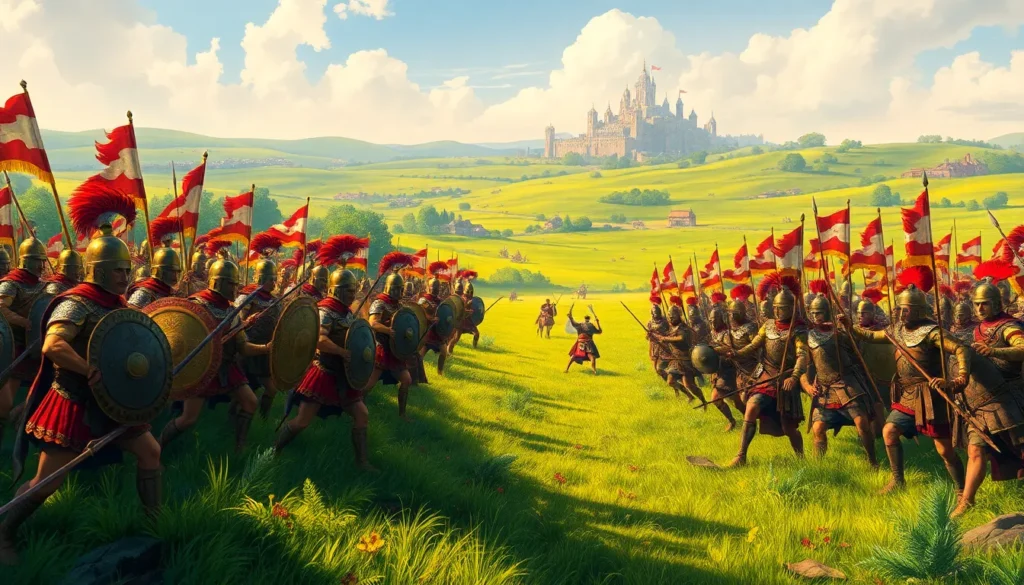
In the epic showdown of strategy games, two titans stand tall: Age of Empires and Civilization. Each offers a unique twist on history, allowing players to build empires, conquer lands, and occasionally wonder why their villagers can’t seem to chop wood without getting distracted. Whether it’s real-time battles or turn-based tactics, these games have captured the hearts of strategy enthusiasts everywhere.
Overview of Age of Empires and Civilization
Age of Empires and Civilization represent two distinct approaches to strategy gaming. Each series features a unique blend of historical events and culture, immersing players in different eras and styles of gameplay. Players in Age of Empires focus on real-time strategy, with immediate decision-making during battles and resource management. This demands quick thinking and rapid responses to shifting circumstances.
Civilization, in contrast, emphasizes turn-based gameplay, allowing players to reflect and strategize before making each move. This format offers deeper planning opportunities, with emphasis on long-term strategy and diplomacy. Players develop their civilizations across various ages, making decisions on technology, culture, and military strategies as they advance.
Game mechanics also differ significantly between the two. Age of Empires requires players to gather resources and build armies confrontationally. Players manage villagers to construct buildings and generate resources necessary for expansion. Civilization encourages a broader scope of nations and leaders, incorporating aspects like cultural achievements and scientific progress.
Graphics and art styles showcase the distinct identities of both games. Age of Empires features detailed historical units and structures, bringing ancient civilizations to life visually. Civilization focuses on a stylized representation that reflects its turn-based nature, prioritizing information and ease of understanding.
Both games captivate strategy enthusiasts through their unique offerings. Whether players prefer real-time tactics or turn-based thoughtfulness, Age of Empires and Civilization deliver engaging historical experiences that challenge and entertain.
Gameplay Mechanics Comparison
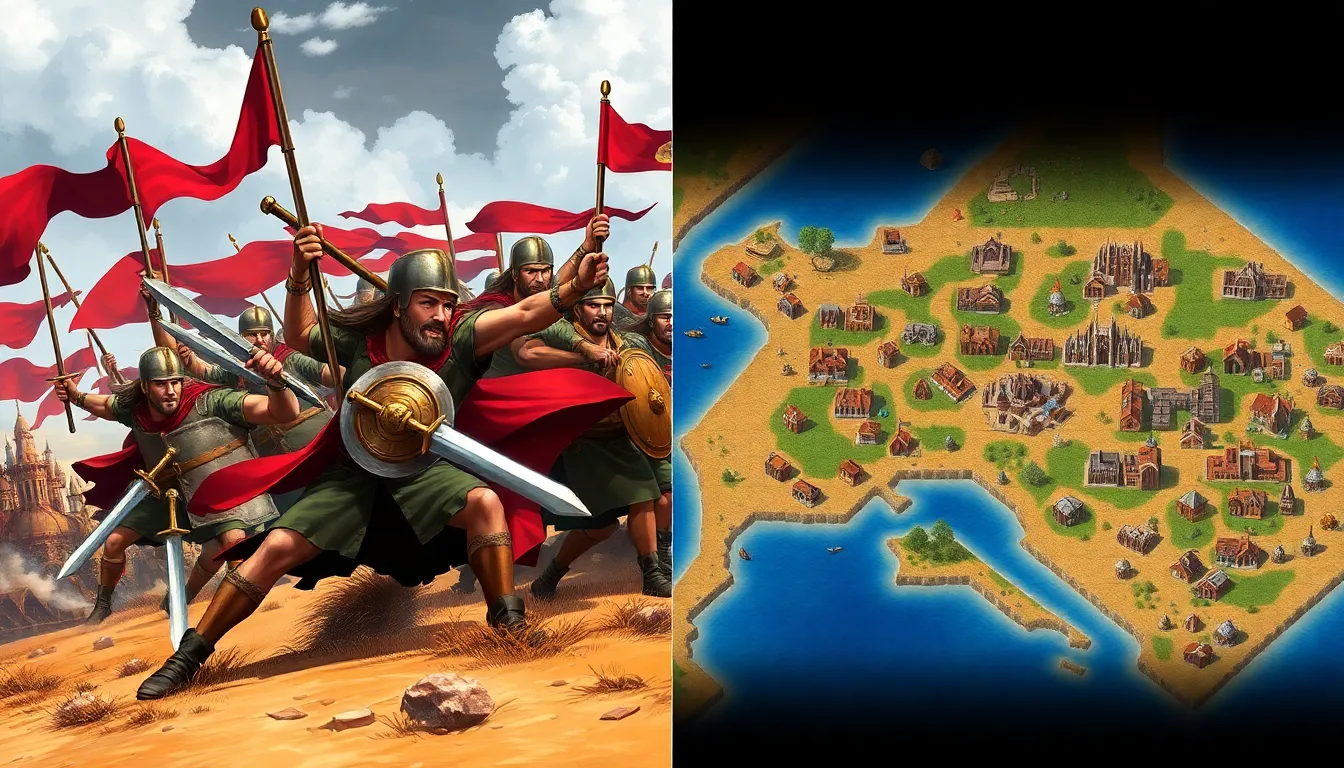
Gameplay mechanics in Age of Empires and Civilization highlight their distinct approaches to strategy. Each game offers unique ways to manage resources and engage in combat.
Resource Management
In Age of Empires, players gather resources in real time. They collect wood, food, gold, and stone to build structures and train units. Quick decision-making affects the efficiency of resource gathering. Gathering resources requires a balance between offense and defense. On the contrary, Civilization adopts a turn-based approach to resource management. Players engage in strategic planning across eras. They focus on developing cities and civilizations instead of quick skirmishes. Thus, managing resources in Civilization emphasizes technological, cultural, and military advancements across various ages.
Combat Systems
Combat in Age of Empires emphasizes real-time strategies. Players control armies while managing resource flow. Tactical positioning and unit type significantly affect success in battles. Aiming for quick reflexes and immediate responses dominates gameplay. In contrast, Civilization offers a more calculated approach to combat. Turn-based mechanics allow for thoughtful strategies and long-term planning. Players can develop military technologies and choose their battles wisely. Each unit moves across the board at a measured pace, analyzing opponent strengths. Ultimately, both games present unique combat experiences tailored to individual player styles.
Historical Context and Themes
Both Age of Empires and Civilization draw players into rich historical narratives, immersing them in significant time periods and diverse civilizations. These elements enhance the gameplay experience through context and depth.
Time Periods Represented
Age of Empires spans various epochs, including the Stone Age, the Feudal Age, and the Imperial Age. Each age introduces unique technologies, units, and structures, contributing to dynamic gameplay. Civilization also covers extensive time periods, from ancient history to the modern era. Players advance through distinct ages, which shape their strategies and interactions with other civilizations. Certain scenarios allow a deeper exploration of specific historical contexts, prompting players to adapt and innovate.
Civilizations and Factions
In Age of Empires, players choose from numerous civilizations, each with unique units and bonuses. Examples include the British known for their longbowmen and the Mongols with their fast cavalry. Each faction’s distinct strengths encourage strategic diversity. Civilization features a similar array of civilizations, encompassing various cultures such as the Romans, Egyptians, and Aztecs. Each civilization possesses specific traits and unique units that influence gameplay. Players leverage these differences to craft their strategies, creating a rich tapestry of competitive play and historical representation.
Graphics and User Interface
Graphics and user interface play critical roles in the player experience for both Age of Empires and Civilization. Each game features distinct visual approaches that enhance gameplay immersion.
Visual Style
Age of Empires showcases visually detailed units and structures, with a focus on historical accuracy. Players engage with vibrant landscapes and intricate animations, which bring the game’s periods to life. Its realistic art style supports the game’s historical themes, appealing to those who appreciate authenticity. In contrast, Civilization employs a more stylized representation, prioritizing clarity over realism. This approach makes information easily digestible, helping players navigate complex systems. Both styles serve their respective gameplay mechanics, making strategic information accessible without compromising aesthetics.
Accessibility and Learning Curve
Accessibility defines the onboarding experience for new players. Age of Empires emphasizes intuitiveness with a familiar point-and-click interface, promoting quick learning. Players can dive right into real-time battles without extensive tutorials. Civilization, however, presents a steeper learning curve with its deep mechanics and layered systems. Players often require patience to master its turn-based strategies fully. Despite this challenge, the game’s comprehensive tutorials and tooltips guide newcomers through its complexities. Both games cater to different skill levels, making them appealing to a broad audience.
Community and Multiplayer Experience
Age of Empires and Civilization both foster vibrant communities, though their multiplayer experiences differ. Age of Empires thrives on real-time multiplayer action. Players engage in fast-paced battles, strategizing with teammates while managing resources and units. This emphasis on immediate competition encourages quick adaptation and strategic collaboration.
Civilization takes a different approach, emphasizing turn-based multiplayer gameplay. Players take their time to plan moves, often discussing strategies with allies before executing them. This slower pace allows for deeper strategy discussions and long-term planning, creating a different kind of camaraderie among players.
Both games support online multiplayer modes, but Age of Empires offers a straightforward, competitive arena. Players frequently join ranked matches, showcasing their skills against others. In contrast, Civilization’s multiplayer often prioritizes cooperative gameplay, with players teaming up against AI opponents or cooperating to achieve shared victory conditions.
Community-building features enhance both games. Age of Empires hosts lively online forums and events, where players share strategies and tips. Similarly, Civilization encourages modding and user-generated content, with a dedicated community creating scenarios and enhancements that enrich gameplay.
Social elements play a significant role as well. Age of Empires supports clan systems, allowing players to form groups, compete in tournaments, and build friendships. Civilization fosters a different type of social interaction through forums and dedicated platforms, where strategy discussions increase player engagement.
Ultimately, both games cater to distinct community preferences. Age of Empires appeals to those seeking real-time thrills and direct competition, while Civilization attracts players who favor thoughtful strategy and long-term alliances. Each game’s community and multiplayer features contribute significantly to the overall gameplay experience, enhancing immersion and enjoyment.
The rivalry between Age of Empires and Civilization showcases the diverse landscape of strategy gaming. Each title offers a unique experience that caters to different player preferences. Age of Empires thrives on real-time action and quick decision-making, while Civilization invites players to engage in thoughtful, turn-based strategy.
Both games excel in their historical representations and community engagement, fostering rich environments for players to explore. Whether one prefers the fast-paced battles of Age of Empires or the intricate planning of Civilization, both games deliver compelling gameplay that continues to captivate audiences. Ultimately, the choice between them comes down to personal taste, ensuring that strategy enthusiasts find joy in either realm.